




Iditarod Sled Dog Race: What Your First Iditarod Is Really Like
Iditarod Sled Dog Race: What Your First Iditarod Is Really Like
Thursday 05 November 2026
A first-timer's guide to the Iditarod: the Musher's Banquet, the ceremonial start in Anchorage, the restart in Willow and a ski-plane flight to the Rainy Pass checkpoint, with the insider details most visitors only learn on the ground.
THE LAST GREAT RACE · A FIRST-TIMER'S GUIDE
You can read about the Iditarod for years and still not be ready for the sound of a hundred sled dogs begging to run.
Every March, the best mushers in the world leave Anchorage for Nome, roughly 1,000 miles away across mountain passes, frozen rivers and open coastline. It is one of the toughest endurance events on the planet, and the best part is that visitors can stand right at the edge of it. You do not need to be a dog person or a racing fan. You just need to be there.
This guide walks you through a first Iditarod week, one step at a time, based on how our Iditarod Sled Dog Race Tour guests experience it. For the official race rules, schedule and live tracking, visit the official Iditarod website.
~1,000
miles from Anchorage to Nome
Up to 14
dogs on each team at the start
8 to 10+
days for the race to finish
1973
year of the first Iditarod
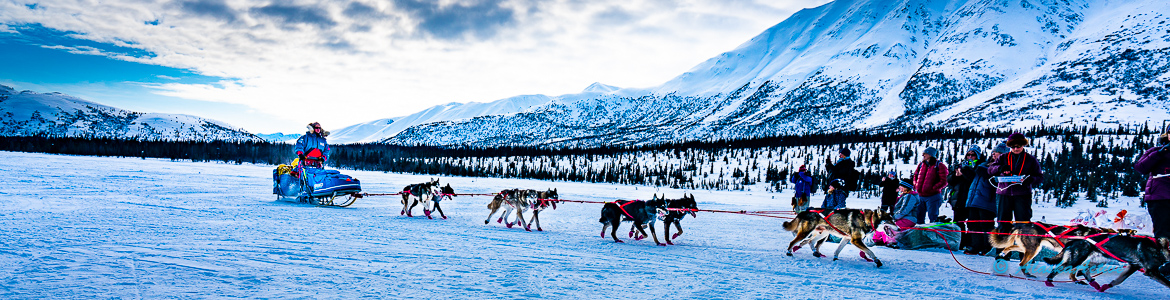
A team heads out onto the trail.
Race Week at a Glance
A first-timer's week has a natural rhythm. Here is the order things happen, so you know what you are walking into.
A few days before the start
Musher's Banquet
Mushers draw their starting positions, and fans meet them up close. It is a lively, informal evening, and one of the best ways to feel the race before it begins.
First Saturday in March
Ceremonial start, Anchorage
Teams roll through downtown on 4th Avenue and out along the city trails. It is a celebration, not a timed race.
Sunday
Official restart, Willow
The clock starts for real. Quieter and more open than downtown, with the teams heading out onto the frozen trail.
Race days
Rainy Pass and the checkpoints
Fly out by ski plane to a remote checkpoint and watch the teams arrive, rest, feed and go.
About a week and a half later
Nome
The first team reaches the burled arch on Front Street. Most visitors follow this part online.
Step 1: The Musher's Banquet
Before a single dog moves, the mushers gather for the banquet. It is where the starting order is decided, with each musher drawing a position. That draw shapes the first day of the race, so the room has real tension, and real applause. You will see household names from the sport sitting a few tables away, in their best clothes, usually looking a little nervous.
INSIDER NOTE
Tickets are limited and sell out. If the banquet is on your wish list, ask us early. You can read more on our Musher's Banquet page.
Step 2: The Ceremonial Start in Anchorage
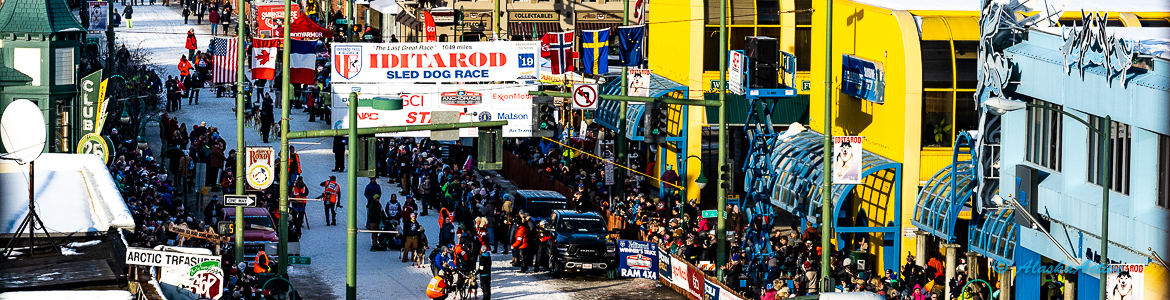
Ceremonial start in Anchorage: teams leave downtown every couple of minutes.
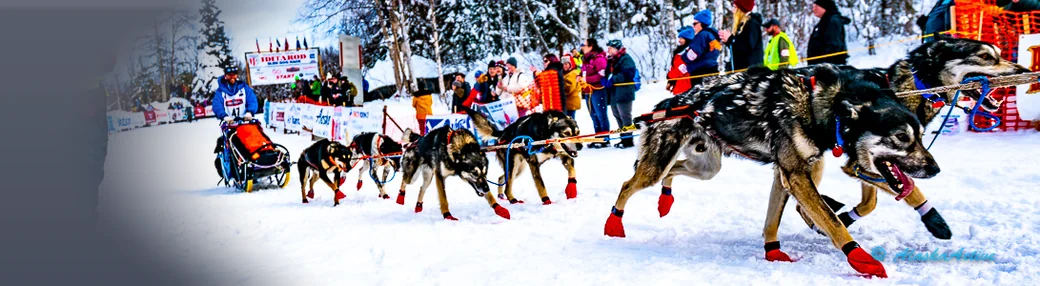
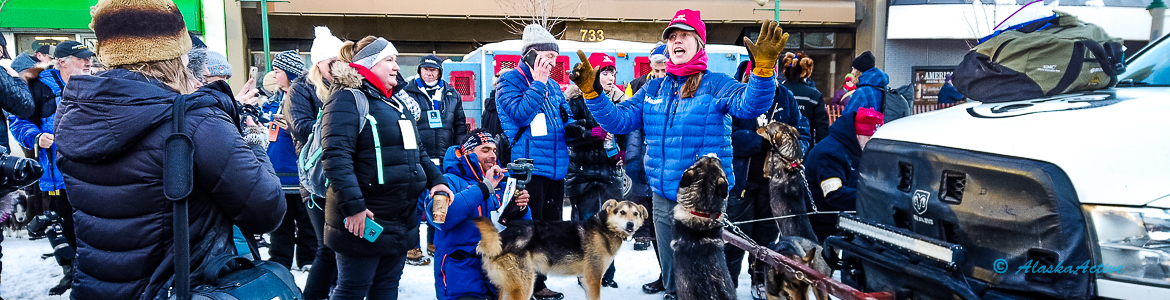
The ceremonial start is the party. Downtown Anchorage closes 4th Avenue, trucks haul in snow and the sidewalks fill with locals, visitors and kids on their parents' shoulders. Teams leave the start line one by one, and the mushers wave, joke and sometimes carry a passenger in the basket. It is the best place to see the dogs up close, because the teams are running at an easy pace and the crowd is just a rope away.
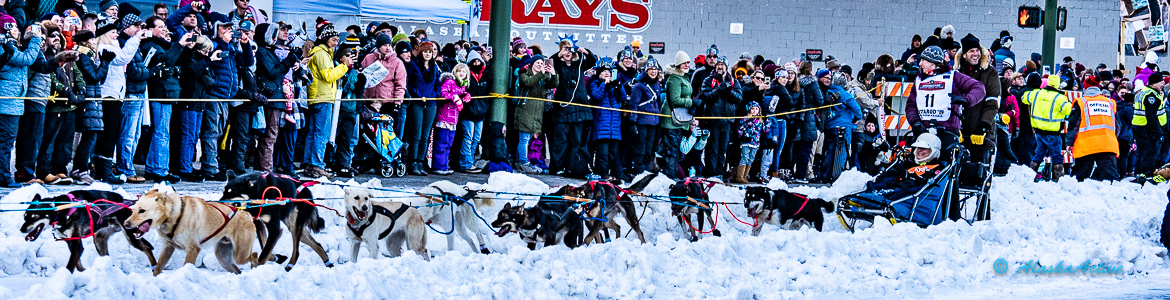
Excitement as the teams travel down 4th Avenue.
The route continues out of town along trails for about eleven miles. Although the clock does not count here, the dogs do not seem to know that. You will notice they are leaping and barking in their harnesses long before the start, and they scream the moment the sled is released. The silence that follows, as a team disappears down the trail, is almost as striking as the noise before it.
INSIDER NOTE
The start line is the busiest spot. Walk a block or two along the route, where there is more room to stand and a better view of the teams at speed.
Step 3: The Restart in Willow
If the ceremonial start is the party, the restart is the race. Teams are trucked north to Willow, where the official clock starts and the field heads out onto a frozen lake and into the wilderness. The atmosphere is calmer. Fewer people, wide open space and the sense that the real journey is beginning.
Bring warm layers. Willow is usually colder than Anchorage, and there is no shelter on the lake. You can find a map of the area on our Willow restart page, and our packing guide covers what to wear.
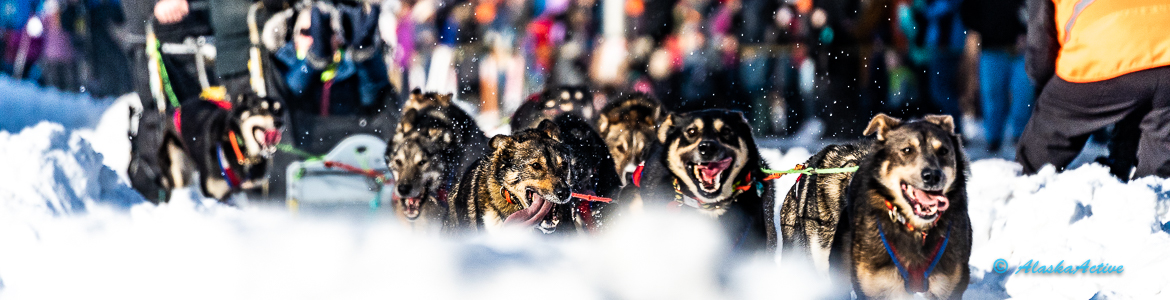
A powerful team in full stride.
Step 4: Rainy Pass by Ski Plane
This is the part most first-timers remember longest. A small ski plane lifts you out of Willow and into the Alaska Range, over frozen rivers and snow-covered peaks, and sets down at a remote Iditarod checkpoint such as Rainy Pass. There are no crowds, no vendors and no music. Only a cabin, a few volunteers, a campfire and the hiss of runners as a team slides in.
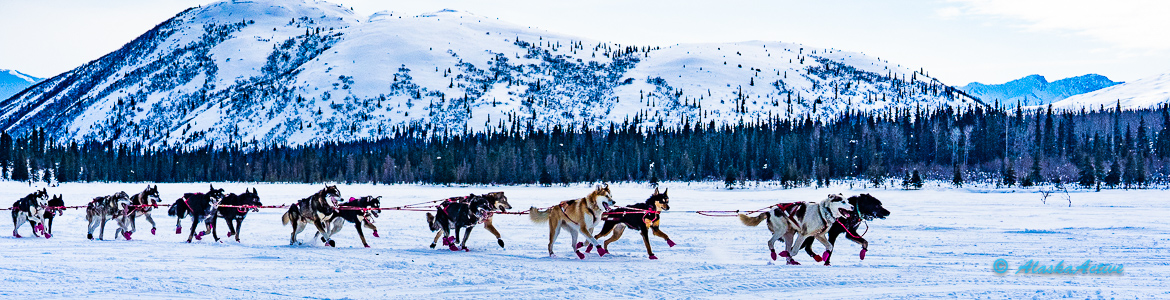
A team arrives at the Rainy Pass checkpoint.
At a checkpoint, you see the race as the mushers live it. A team pulls in, and the first thing the musher does is care for the dogs: unclip the harnesses, lay down straw, massage shoulders and check feet. The mushers eat last. You will see tired, focused people moving carefully, and dogs that are tired but still eager to go.
Our Iditarod Race Checkpoint Adventure is built around this experience. Flights depend on weather and daylight, so keep your schedule flexible, and pack soft bags because small planes have strict weight limits.
INSIDER NOTE
Checkpoint volunteers are working. Ask before you photograph a resting team, keep your voice low and never offer treats to the dogs.
The Dogs: What Makes the Race Possible
The Iditarod is a dog race first. The animals are Alaskan huskies, bred for endurance, a strong appetite and a love of running. They are not a registered breed, and many look nothing like the postcard husky. A running team can burn up to around 10,000 calories per dog per day, which is why mushers pack so much food and feed along the trail.
Teams of up to 14
A musher starts with as many as 14 dogs and must finish with at least five still on the line.
Booties on every paw
Mushers carry booties for every dog and change them often. Rough ice and snow can damage feet.
Commands you will hear
Gee means right, haw means left, whoa means stop, and the dogs often start on the word hike.
Required gear
Each musher carries a sled, an axe, snowshoes, a sleeping bag, a cooker and more, and must pass vet checks.
To go deeper, read our page about the Iditarod dogs, or arrange a kennel visit with a veteran musher. It is a chance to meet the dogs on their own ground, ask questions and often take a short sled ride.
Ten Tips for Your First Iditarod
Book early
Anchorage and the surrounding towns fill up for race week. Rooms and flights are easier to find months ahead.
Dress for standing still
You will be stationary for hours. Choose insulated boots, mittens and a windproof parka.
Warm your hands and feet
Air-activated heat pouches in boots and mittens make a big difference over a long day.
Arrive a day early
Weather and flights can slip. A buffer day removes a lot of stress.
Keep your plans flexible
Race days run on weather, trail conditions and dog care, not on a fixed timetable.
Give the dogs room
Never approach a team without asking a handler. A dog in harness is working.
Charge everything
Cold drains batteries. Carry spares in an inside pocket and swap them often.
Follow the race online
Use the official tracker to see where teams are, then plan your day around the action.
Eat where the fans eat
Humpy's in Anchorage is a classic hangout for race fans. Visit their website for hours and menu.
Stay curious
Mushers, handlers and volunteers love to explain the race. Ask, and you will learn a lot.
Frequently Asked Questions
When is the Iditarod?
The race traditionally starts in early March, with the ceremonial start on the first Saturday and the official restart on Sunday. Check the official schedule for current dates.
Which route does the race take?
The trail alternates between a northern route in even years and a southern route in odd years. Both end in Nome, and both pass through remote checkpoints such as Rainy Pass.
Can I pet the dogs?
Sometimes, with permission. Always ask a handler first. At race events the dogs are working, and busy teams are better left alone.
Will I be able to see the whole race?
No. The race covers about 1,000 miles of wilderness. Visitors usually see the starts and one or two checkpoints, then follow the rest online.
What is the weather like?
Expect anything from mild days around freezing to cold, windy mornings well below zero. Dress in layers and read our packing guide before you go.
Is the Iditarod suitable for children?
Yes. The ceremonial start in particular is a family event. Keep children warm, and keep them close to you around the dogs.
Why do they race to Nome?
The route follows the historic Iditarod Trail, and the race honors the 1925 serum run, when dog teams carried medicine to Nome during a diphtheria outbreak.
Ready for your first Iditarod?
Choose a race tour that fits your dates, from the ceremonial start to a ski-plane flight to the checkpoints, and we will take care of the rest.
Ask us a question