Slide background
Slide background

NID03 Iditarod & Alaska Winter Adventure

Experience the Iditarod and Alaska’s winter backcountry on this ten-day Iditarod tour by train. Join the Mushers’ Banquet in Anchorage, watch the Iditarod Ceremonial Start on 4th Avenue and the restart in Willow, and take a scenic ski-plane flight to the remote Rainy Pass checkpoint in the Alaska Range, where you watch the mushers and their dog teams arrive and enjoy lunch. Then ride the Alaska Railroad to Talkeetna, a former gold-mining town with winter activities such as cross-country skiing, snow machining and sled dog rides, and on to Fairbanks. There, the Chena Northern Lights Viewing Tour takes you to Chena Hot Springs Resort with its natural hot springs and the Aurora Ice Museum. The tour starts in Anchorage, ends in Fairbanks and includes nine hotel nights. Explore our detailed day-by-day itinerary and the Iditarod Guide or Iditarod FAQ for background and tips, or contact us to customize this Iditarod and Alaska winter adventure to your interests.

  • Itinerary

  • Prices & Dates

  • Attractions & Add-ons

  • Accommodation

  • Map

  • Tour Info & FAQ

  • Iditarod Race FAQ

  • Reviews

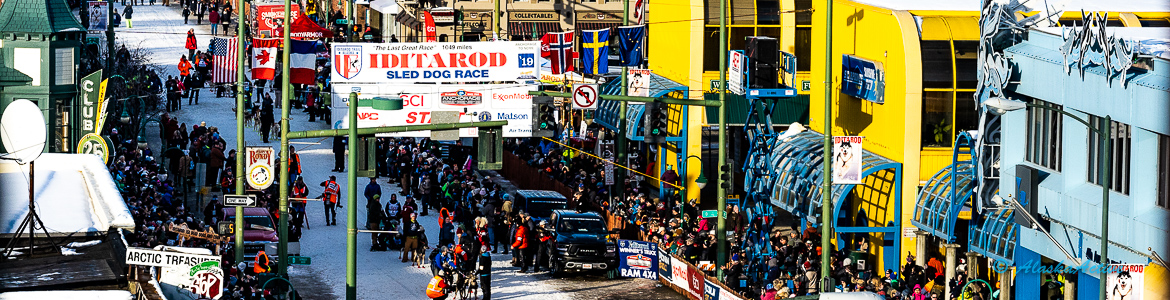
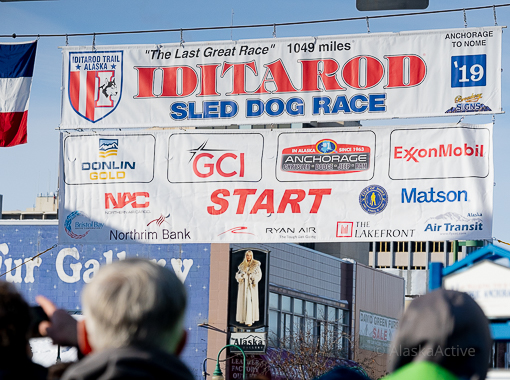
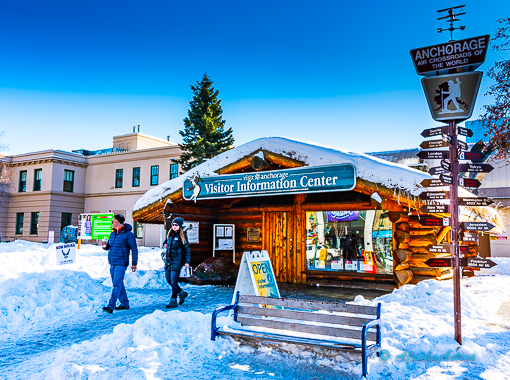
Anchorage Iditarod Race Start Sign

Anchorage (Mushers Banquet) ( Overnight: Anchorage )

Welcome to Anchorage! Check in to your downtown hotel. At 4:00 PM, doors open for the Musher Meet & Greet at the Dena’ina Center, and the program and Mushers’ Banquet dinner begin at 6:00 PM. The banquet is the annual fundraiser for the Iditarod, with a three-course meal, live and silent auctions and the mushers’ drawing for their official start order. It is a must for anyone seeing “The Last Great Race on Earth” for the first time, with plenty of photo opportunities, a good chance to meet and talk with Iditarod mushers personally and to collect autographs.

Anchorage Winter City Sightseeing

Anchorage (City Sightseeing Tour) ( Overnight: Anchorage )

Your three-hour Anchorage sightseeing tour starts at historic Ship Creek, where Anchorage was born as a tent city and where the Alaska Railroad terminal stands. Check out this year’s snow sculptures and vote for your favorite. Continue through Bootleggers Cove to Earthquake Park, where signs of the 1964 earthquake remain, then drive around Lake Hood, home to the world’s busiest seaplane base. Next come Turnagain Arm and Beluga Point, where you can look for beluga whales and Dall sheep, followed by Potter Marsh in the Anchorage Coastal Wildlife Refuge, Chugach State Park and views of Flattop Mountain.

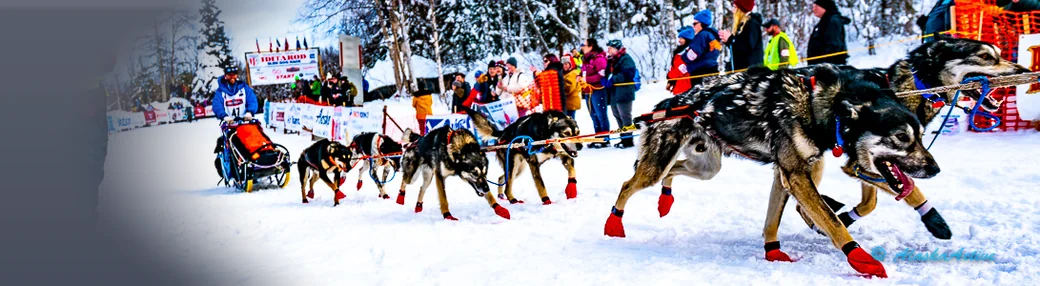
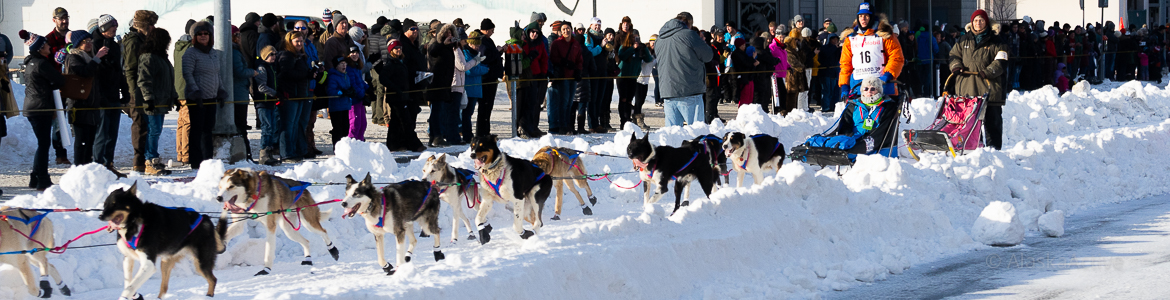
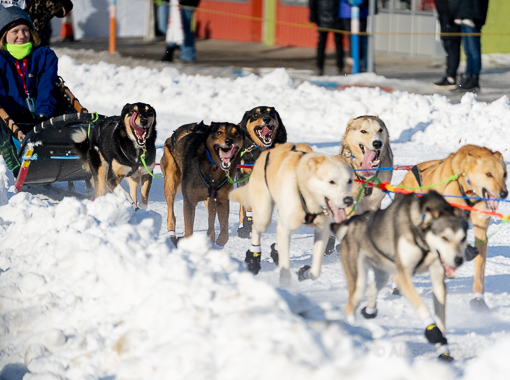
Sled dog team at the Iditarod Race Start Anchorage

Anchorage (Iditarod Ceremonial Race Start) ( Overnight: Anchorage )

The Iditarod Trail Sled Dog Race, known as “The Last Great Race on Earth,” begins with its ceremonial start on 4th Avenue in downtown Anchorage, on the first Saturday of March. The first team leaves the starting line at 10 AM. Watch the teams get ready, take close-up photos of around 40 mushers and more than 700 sled dogs, and enjoy the lively atmosphere as crowds line the street. Anchorage’s parks and green belts along the route offer quieter spots to watch the teams run by. From here, the teams begin their journey toward Nome, a race of roughly 1,000 miles across Alaska’s wilderness, mountain passes, and frozen rivers. The race commemorates the 1925 serum run, when mushers and sled dogs relayed diphtheria antitoxin to Nome and stopped an epidemic. Balto, the lead dog on the final leg, became the most famous dog of the relay. The story is a classic tale of adventure and sacrifice, as mushers risked their lives in brutal winter conditions to save their fellow citizens.

Iditarod Start Willow

Anchorage (Iditarod Race Start Willow) ( Overnight: Anchorage )

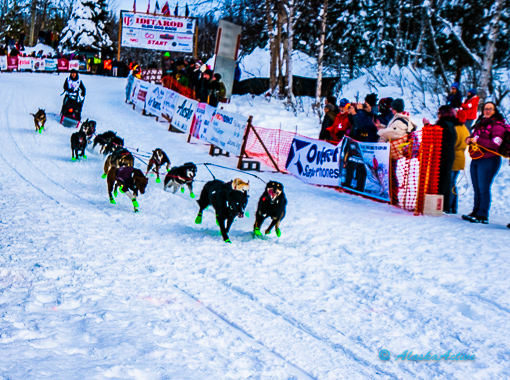
After breakfast, board the motorcoach in Anchorage for a guided tour to the official Iditarod restart in Willow, Alaska. The drive follows the scenic Glenn Highway and the Parks Highway north, with a short stop in Wasilla along the way. In Willow, the restart ceremony begins at 2:00 PM on the Sunday after the ceremonial start in Anchorage. This is where the timed race to Nome begins. Soak up the lively race atmosphere and watch the mushers make their final preparations, checking sleds, gear and dogs before heading out. Thousands of cheering fans line the restart area. Beyond it, the teams leave the crowds behind for remote Alaska wilderness and a finish line in Nome, roughly 1,000 miles away (the official distance is 1,049 miles). The trail can be perilous for both mushers and dogs. In the evening, the motorcoach returns to Anchorage at approximately 6:00 PM.

Musher feeding dogs at Rainy Pass Lodge

Anchorage (Rainy Pass Checkpoint Day Tour) ( Overnight: Anchorage )

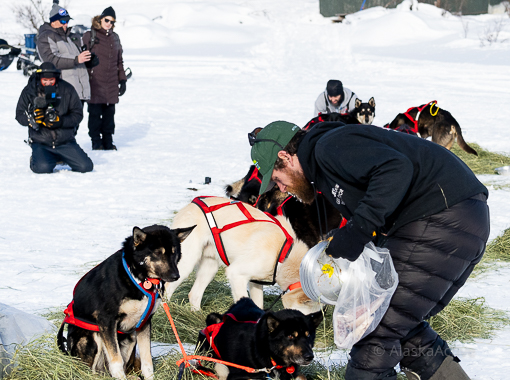
Experience one of Alaska’s most spectacular flightseeing adventures with a morning ski-plane flight deep into the majestic Alaska Range. Your destination is the remote Rainy Pass checkpoint, a key location along the legendary Iditarod Trail and one of the race’s most scenic wilderness settings. Spend the day surrounded by breathtaking alpine landscapes, watching Iditarod mushers and their sled dog teams arrive, rest, and prepare for the challenging mountain crossing ahead. This exclusive experience offers a rare opportunity to witness the determination, teamwork, and spirit of the Last Great Race up close, far from the crowds. Take in the spectacular scenery, capture unforgettable photographs, and enjoy a hearty lunch at the historic Rainy Pass Lodge before your scenic late-afternoon flight back to Anchorage.

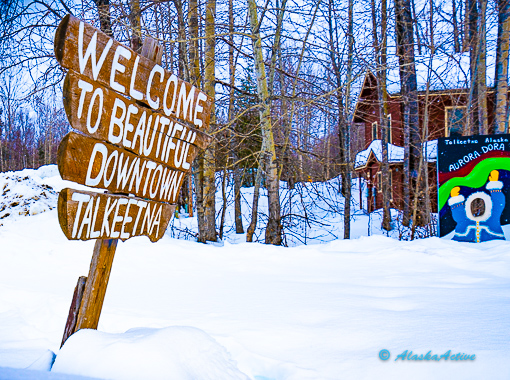
Talkeetna Welcome Sign

Anchorage – Talkeetna | by Alaska Railroad ( Overnight: Talkeetna )

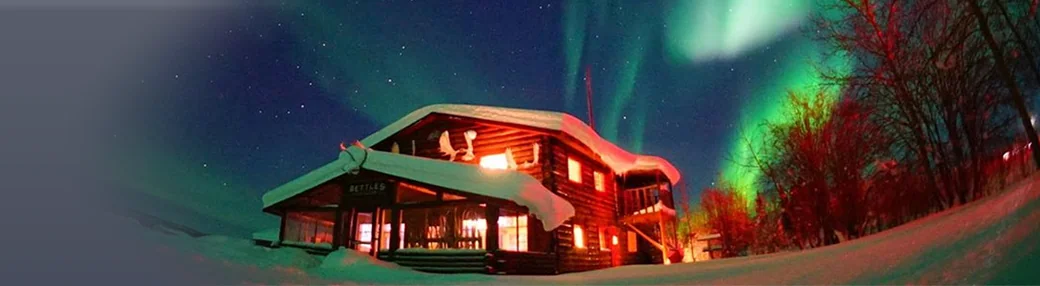
Depart Anchorage at 8:30 AM for a scenic Alaska Railroad journey to Talkeetna. Enjoy Alaska’s winter backcountry from a warm railcar with comfortable seats, large picture windows and onboard dining. On a clear day, Denali rises above the Susitna River, and a watchful eye may spot a moose along the tracks. In Talkeetna, transfer to a mountain lodge with views of Denali. At night, you may see the Aurora Borealis dancing across the northern sky.

snowcovered Talkeetna Roadhouse

Talkeetna ( Overnight: Talkeetna )

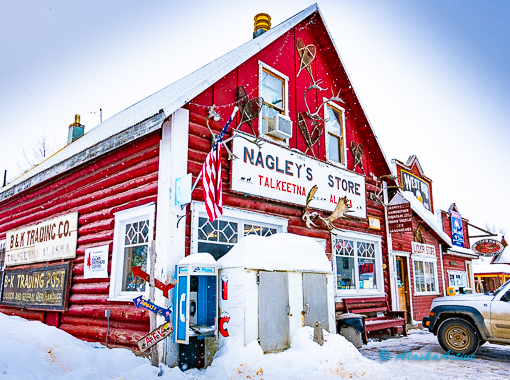
Talkeetna was a gold-mining center at the turn of the 20th century and still has much of its early Alaska flavor, with log cabins, a roadhouse and clapboard storefronts along its dirt streets. The small village bustles with visitors and mountain climbers in summer; in winter it is much quieter, with outdoor activities such as cross-country skiing, snow machining and sled dog rides. You might also take a sightseeing flight to see Denali up close. In the cold, dark winter skies you may see the northern lights above your lodge and the Alaska Range, and we will even give you a wake-up call during the night so you don’t miss them.

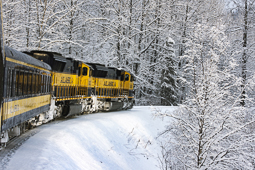
Aurora Winter Train

Talkeetna - Fairbanks | by Alaska Railroad ( Overnight: Fairbanks )

Board the Alaska Railroad at 11:15 AM for the scenic ride through Denali National Park to Fairbanks. Keep your camera ready as the train crosses Hurricane Gulch Bridge, 300 feet above the creek, with views of the snow-covered Alaska Range. You arrive in Fairbanks at 8:00 PM and transfer to your hotel near the banks of the Chena River. Known as the Golden Heart City of Alaska, Fairbanks lies only 120 miles from the Arctic Circle and offers winter activities from the Open North Sled Dog Race Championship to the World Ice Art Championship. Optional: a northern lights viewing tour to a lodge outside Fairbanks.

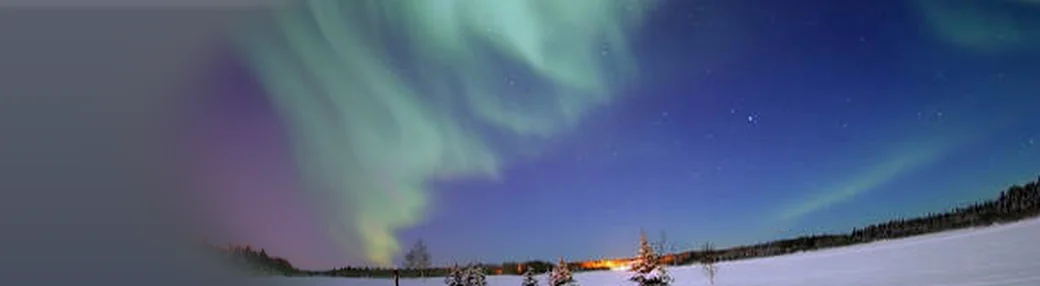
Chena Northern Lights Tour

Fairbanks (Chena Aurora Viewing Tour) (Overnight: Fairbanks)

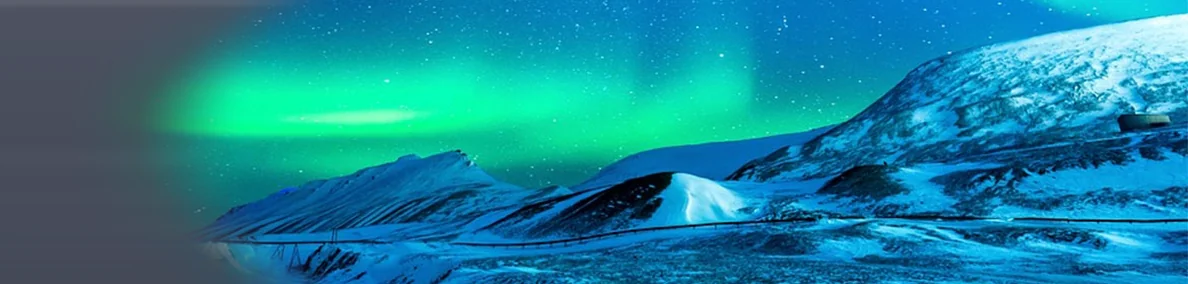
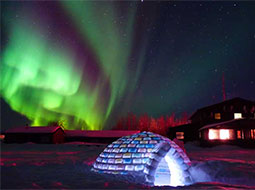
Enjoy a full day at leisure in Fairbanks: join a sled dog tour, try ice fishing or visit the University of Alaska Museum. At 5 PM you are picked up from your hotel for the drive to Chena Hot Springs Resort, 60 miles northeast of Fairbanks. Soak, swim or relax in the large heated mineral indoor pool, the outdoor rock lake (adults only) and the hot tubs while you wait for the northern lights to appear in the evening. The included visit to the famous Aurora Ice Museum and Stoli Ice Bar is a highlight. Dine at the resort restaurant, which serves everything from hamburgers to Alaskan king crab, or join the free geothermal tour. After dark, watch for the northern lights at the resort. Return to Fairbanks between 3 and 4 AM.

Alaska Winter Tour

Fairbanks

Use the morning to visit the University of Alaska Museum, home to the state’s largest collection of gold nuggets, gold mining history and Alaskan heritage artifacts, and the nearby Geophysical Institute, recognized as the best in the world for its Aurora Borealis research. You may also join a bush mail plane flight to a remote Native village above the Arctic Circle. Downtown Fairbanks has a variety of gift shops and art galleries, such as the Rose Berry Art Gallery, with tasteful gifts for friends at home. Stroll through downtown before returning to the airport for your individual flight home. Tour extensions are available on request.

Rates in US $ / per Person
Comfort Hotel Category Single Double Triple Quad Child
March 4 - March 13 $4195 $3331 $3118 $3012 $2396
First Class Hotel Category Single Double Triple Quad Child
March 4 - March 13 $4985 $3726 $3330 $3150 $2396

What’s included

9 Nights Comfort or First Class Hotel Accommodation

Local Taxes

Mushers Banquet Ticket, Meet & Greet including Dinner

Anchorage City Sightseeing Tour

Iditarod Restart Tour to Willow

Flightseeing Day Tour to Rainy Pass Checkpoint including lunch

Alaska Winter Rail Tour from Anchorage – Talkeetna

Alaska Winter Rail Tour from Talkeetna – Fairbanks

Reserved Seats

Fairbanks: Chena Northern Lights Viewing Tour including Ice Museum 

Talkeetna and Fairbanks Airport & Railroad Station Transfers

Sightseeing Information

Tour Documentation

Tour Departures

March 04 - March 13, 2027

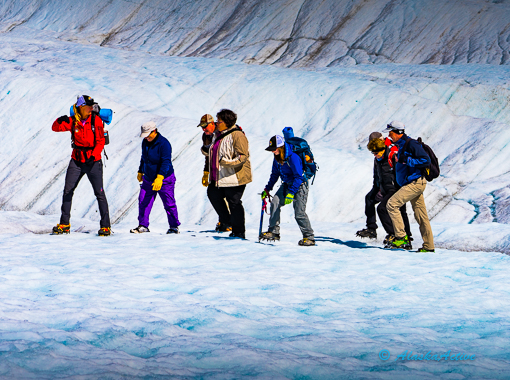
Matanuska Glacier Walk

The Matanuska Glacier is a stable 27 mile long river of ancient ice. Thousands of years old, this massive glacier is tucked up into the Matanuska Valley. You spend 2 h. on the glacier learning how the glacier has formed the landscape in the Matanuska Valley. Explore blue meltwater pools, the ice formations and deep crevasses that make up the Matanuska Glacier. Walking on ice is slippery fun so our guests are equipped with a helmet, walking stick and cramp on for your shoes. This tour requires a walk of 1.5-2 h. In these winter months, we will actually have the assistance of a snowmachine. Of course, our fully-guided transportation includes a pick up at your hotel in Anchorage as well as water and snacks in the touring vehicle. We will also stop for lunch where we will overlook the glacier while enjoying some yummy Alaskan fare

More Details & Pricing


Group of hikers walking on the Matanuska Glacier
 

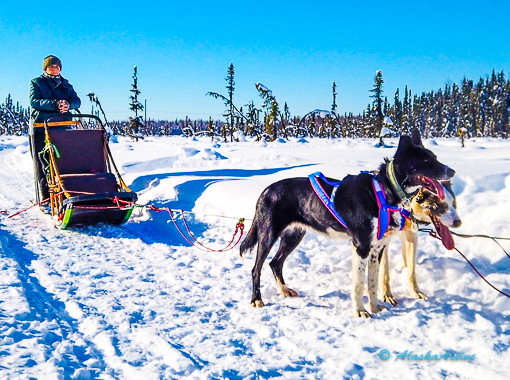
Alaska Winter Dog Sled Adventure - 2 hrs 

Experience the ultimate Alaska adventure with our #1-rated Dog Sled tours! Located near the iconic Iditarod restart in Willow - 70 miles north of Anchorage, we invite you to delve into the magic of dog sledding, a quintessential experience in the Last Frontier. From the moment you step into our kennel, you'll be greeted by retired sled dogs eager to share their stories. Every dog is considered part of our family, and this bond is palpable as you embark on your dog sled tour. Witness the enthusiasm and camaraderie as dogs in their prime lead you through Alaska's winter trails, each holding a special place in our team. Join us for an unforgettable outing, complete with outfitting, trail tales, and the chance to ride in a custom sled or even help drive! Be part of the excitement and give our dogs the love they deserve. Tour times are 10 AM, 12 PM, 2 PM

More Details & Pricing


Dog sled and husky team on a sunny winter trail
 

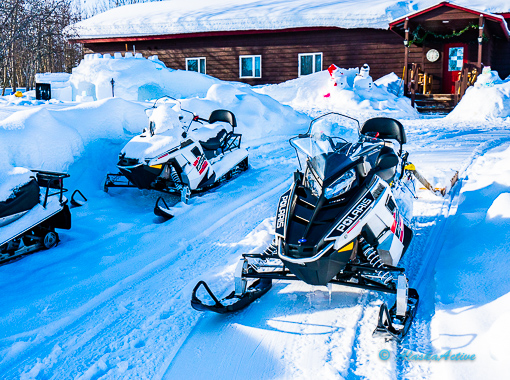
Alaska Snowmobile Adventure 

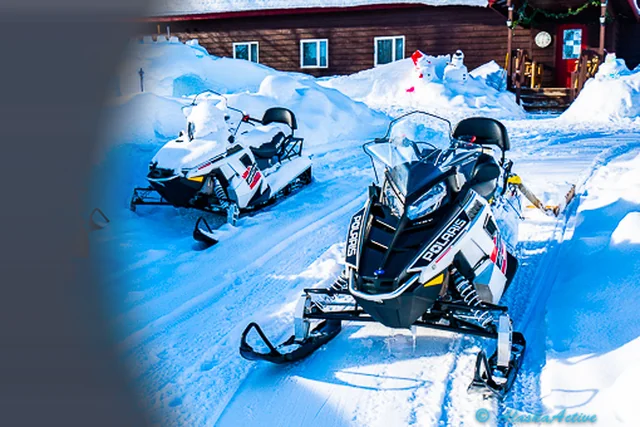
Experience the thrill of riding snowmobiles in the wild backcountry of Alaska with opportunities to see wildlife, breathtaking views of Denali, and of course plenty of charging through the powder. Whether you’re a first-time rider or have more experience, our trails cover a wide variety of terrain from twists and turns to snow-covered forests and mountains that will keep you smiling all day long. Located just over an hour from downtown Anchorage, we have hundreds of miles to ride in Willow. Our tours take you from trail riding to exploring powder-covered fields on the Iditarod Trail, or climbing up the Talkeetna Mountains on Hatcher Pass. We’ll build your skills as we go and help you feel confident to ride like a champ as we get you into the best spots in Alaska! 3 hr Duration. Optional shuttle from Anchorage: add $100 per person

More Details & Pricing


Snowmobiles parked in front of a snowy lodge
 

Prince William Sound Glacier & Wildlife Cruise

A rich variety of wildlife thrives year-round in Prince William Sound, and you can cruise these spectacular waters in the comfort of our spacious heated cabins. Winter is no obstacle to your enjoying the beauty of alpine glaciers, jagged shorelines and towering rocky outcroppings through our vessels' large picture windows. We commonly see Steller sea lions, sea otters, Dall's porpoise, and perhaps even Orca or Humpback whales. There is also a variety of ducks and waterfowl present at this time of the year. Join the 3 1/2 hr cruise to see the massive tidewater glaciers of Alaska at Blackstone Bay and Beloit Glacier - some of the most amazing sights you will ever see. Cruise along Passage Canal and venture into magnificent Blackstone Bay, home to seven glaciers and Yosemite-scale waterfalls. During our adventure you’ll step ashore to experience the natural geology and thick rainforest. Enjoy a snack and hot drink as you reflect on your journey and this magnificent nook of Alaska.

More Details & Pricing

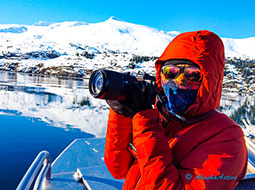
Photographer in a red parka on a winter boat cruise
h

Information

Customizing your tour

All of our Iditarod and winter tours are flexible. You can add nights, extend your stay, or adjust destinations to match your schedule and interests. Some changes may be needed to align with race dates, flight and train schedules, and seasonal availability. Please also review each itinerary online for day-to-day details.

Available Room Occupancy / Bed Configuration

🔹 Single: A room assigned to one person. Room with one bed (double, queen, king size)
🔹 Double: A room assigned to two people. Room with two double/queen beds or a king size bed.
🔹 Triple: A room assigned to three people. Room with two double/queen beds
🔹 Quad: A room assigned to four people. Room with two double/queen beds
The maximum occupancy per room is four. Please request if you require a roll-a-way bed.

How far in advance should I book an Iditarod tour?

We recommend booking as early as possible. The Iditarod takes place in early March, and the ceremonial start in Anchorage and the restart in Willow draw visitors from around the world. Hotels in Anchorage, Fairbanks and especially along the trail and in Nome sell out early, and flights to remote villages and Nome have limited seats. Tours with dog sledding, mushing experiences and Northern Lights viewing also have limited spaces, and the winter season is short.

The same applies around holidays and school breaks. Hotel accommodation, flights to Nome and rural destinations, and winter activities should be booked well in advance. As a tour operator, we may still find space on short notice, so it is well worth contacting us, even if everything looks sold out online.

When does the Iditarod take place and what can I experience?

The Iditarod Trail Sled Dog Race starts on the first Saturday in March. The ceremonial start takes place in downtown Anchorage, followed by the official restart the next day in Willow, where the teams head out onto the trail. The first mushers reach the finish line in Nome about 8 to 10 days later, and the last teams arrive in the days after. The exact dates change every year, so please check the current race schedule when planning. Your tour can be built around race viewing, checkpoint visits, a Nome finish, or a combination with dog sledding and Northern Lights experiences.

What are the best travel months?

For the Iditarod, early March is the time to be in Alaska. For general winter travel, December through March offers the best snow conditions, dog sledding, and Northern Lights viewing. February and March usually bring more daylight than midwinter, with cold, dry and often clear weather. Northern Lights (Aurora Borealis): The aurora can be seen from late August to April, with the best chances on clear, dark nights, especially in the Fairbanks region. Northern Lights are a natural phenomenon and cannot be guaranteed. We therefore recommend several nights in your aurora destination to improve your chances.

What if weather affects my trip?

Alaska winters are unpredictable. Heavy snow, wind and extreme cold can delay or cancel flights, especially to Nome and remote villages, and race timing depends on the mushers and trail conditions. We build flexibility into your itinerary where possible, and we assist you with rebooking and adjustments should anything change. We recommend arriving at least one day before any key activity or flight to Nome, and travel insurance is strongly advised.

Do you offer emergency assistance ?

You can contact us in case of an emergency. We have a dedicated 24/7 helpline available for our guests.

What is included in the tour price?

Please refer to the section "prices/dates" for a listing of included services.
Our Iditarod and winter tour packages generally include:
🔹 accommodation
🔹 applicable local taxes
🔹 flights, train rides and transfers as outlined in the itinerary
🔹 guided tours and activities as outlined in the itinerary
🔹 detailed travel documents

not included:
🔹 international flights
🔹 meals (unless stated in the itinerary)
🔹 travel insurance
🔹 gratuities
🔹 personal expenses
🔹 optional activities and excursions

Optional extras such as additional dog sledding, snowmobiling, hot springs visits or extra nights can be added on request.

Is winter clothing provided and what should I pack?

Many winter activities offer warm outerwear such as insulated overalls, boots and gloves. Please check your itinerary for what is provided. Temperatures can drop well below freezing, so we recommend layered clothing: thermal base layers, fleece or wool mid-layers, a windproof and waterproof outer layer, warm hat, gloves or mittens, scarf or neck gaiter, and insulated winter boots. We will send you a detailed packing list after booking.

Can I drive myself in winter?

Some itineraries include or allow a rental car. Winter driving in Alaska requires experience with snow and ice, shorter daylight hours and changing road conditions, and several highways may be closed or unsafe. A valid driver's license and a valid major credit card are required, and drivers must be at least 25 years of age. Please contact us if you are under 25. Rental car insurance is not included, and most U.S. guests can use their own private insurance. If you prefer not to drive, we can arrange transfers, the Alaska Railroad, or guided tours instead.

What are the Luggage Guidelines ?

For the Alaska Railroad, each passenger may check two bags (up to 50 lbs each) and bring one small carry-on onboard. We recommend packing essentials in your carry-on, as checked luggage is not accessible during the journey. Winter clothing is bulky, so please pack wisely. Flights to Nome and remote villages, as well as small aircraft, have their own weight restrictions, and we will inform you of the allowed lbs in advance. Storage for excess luggage can often be arranged - please ask.

VISA / Identification

The Visa/entry requirements do change frequently. Please check requirements on the appropriate government pages. We are unable to take any responsibility for such information, however you will definitely need a valid passport to enter the U.S. Check out our Arrival & Travel Basics.

Travel Insurance

We strongly encourage you to purchase travel insurance to cover: cancellation fees associated with a tour as well as airfare or other nonrefundable expenses in the event you need to cancel a trip; medical expenses incurred on a trip; the cost of a possible medical evacuation; and canceled or delayed flights due to weather. We have made arrangements with our trusted travel insurance provider for you to purchase a comprehensive travel insurance plan. Please contact us for details

Iditarod Sled Dog Race FAQ: Your Questions Answered

Iditarod sign in downtown Anchorage

Planning a trip around the Iditarod often comes with a lot of questions — and these are exactly the ones our guests ask us most often. From understanding how the Iditarod race works, to where to watch it, how to get around Alaska in winter, and what to expect from the dogs and mushers, there are many details that can make a big difference to your experience.

We’ve gathered the most common questions we receive and answered them here, based on real conversations and our experience organizing Iditarod trips. Our goal is to make your planning easier and help you feel confident and well prepared before you arrive. Traveling in Alaska during winter is a unique experience, and knowing what to expect allows you to enjoy every moment of the race and the surrounding landscapes. If you have additional questions, our team is always happy to share personal advice, practical tips, and recommendations tailored to your travel plans.


When is the next Iditarod?

The Iditarod always begins on the first Saturday in March. The  Iditarod race starts with the ceremonial start in downtown Anchorage on Saturday. The official restart takes place in Willow the next day, Sunday. The ceremonial start is for fans and does not count toward race times. The real race begins at the Willow restart.

The first teams usually reach Nome in about 8 to 10 days. Exact dates change every year, so please ask us for the current schedule when you plan your trip.


Why was the Iditarod Trail Sled Dog Race created?
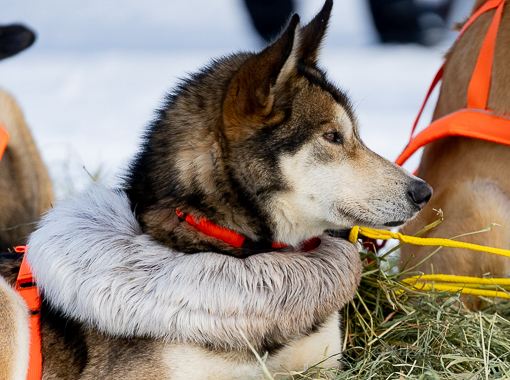
Iditarod sled dog restingFor thousands of years, sled dogs were the backbone of life in the North, used by Indigenous communities for travel, trade, and survival in harsh winter conditions. As newcomers - including settlers, prospectors, and trappers - arrived in what is now Alaska and northern Canada, they quickly relied on dog teams as well. During the gold rush era, these teams became essential for moving mail and supplies between remote camps, especially in winter.

One of the most important routes was the Iditarod Trail, stretching from Seward to Nome across Alaska. Its significance became undeniable in 1925, when a diphtheria outbreak threatened Nome. With no roads, blocked sea routes, and unsafe flying conditions, dog teams carried lifesaving serum across 674 miles in a relay from Nenana. The story is often linked to Balto, one of the lead dogs in the final stretch.

As technology advanced in the mid-20th century, snowmobiles, aircraft, and road systems gradually replaced sled dogs. Fearing that this tradition would fade away, Joe Redington Sr. and fellow mushers organized a race along the historic trail. First held in 1973, the Iditarod Trail Sled Dog Race has since grown into the world’s most recognized sled dog race, keeping this unique heritage alive.


Are there two different trails ?

Only a section of the trail changes each year - roughly 300 miles in the middle.Iditarod Trail Map
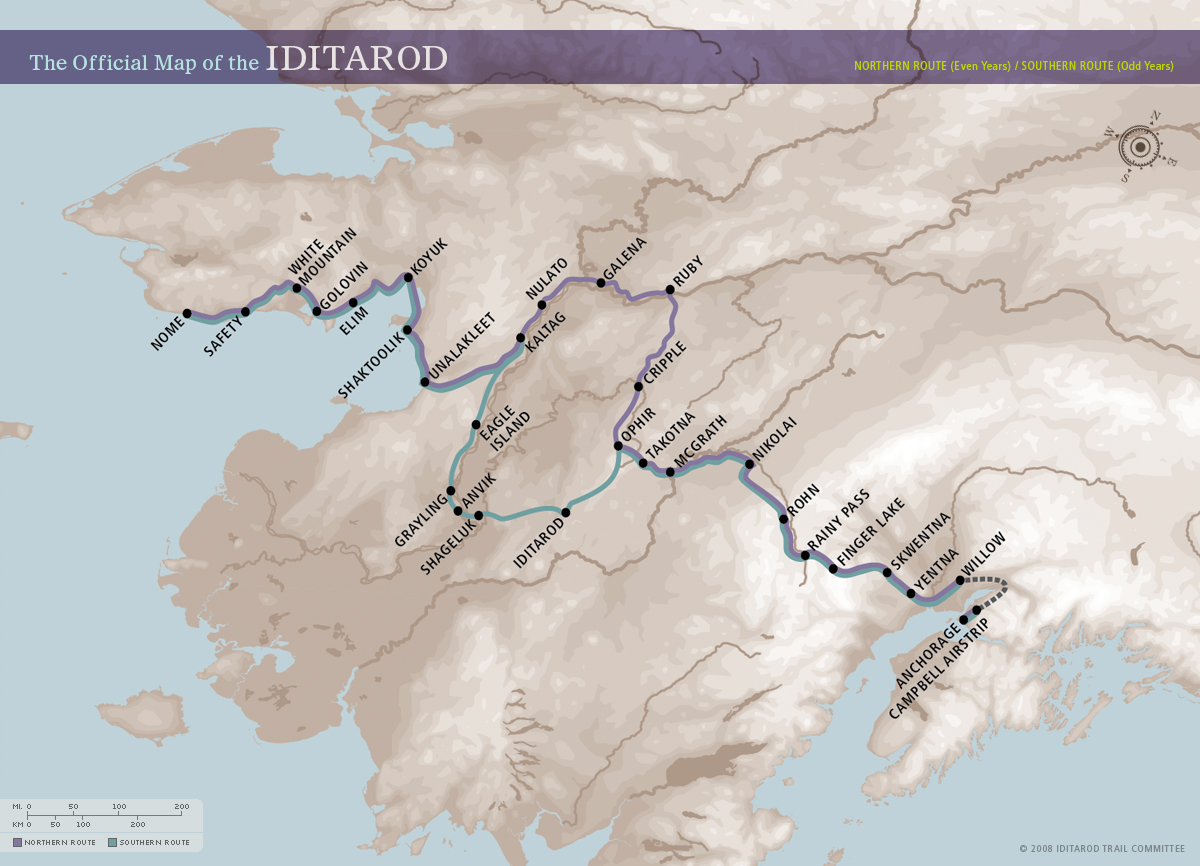
From the start to Ophir, and again from Kaltag to the finish in Nome, the route stays the same every year. The variation happens between Ophir and Kaltag, where two alternate paths are used.

In even-numbered years, the Northern Route is followed. From Ophir, the trail heads north to Ruby, reaches the Yukon River, and continues along it to Kaltag. The 2026 race used the Northern Route. In odd-numbered years, the Southern Route is used, so the 2027 race is expected to follow it. This path goes south from Ophir, passes through the historic ghost town of Iditarod, and connects with the Yukon River near Anvik before turning upstream toward Kaltag.

After Kaltag, all mushers rejoin the same trail to the finish. For a clearer overview, see the official Iditarod Trail Map.


How many mushers take part in the Iditarod Trail Sled Dog Race?
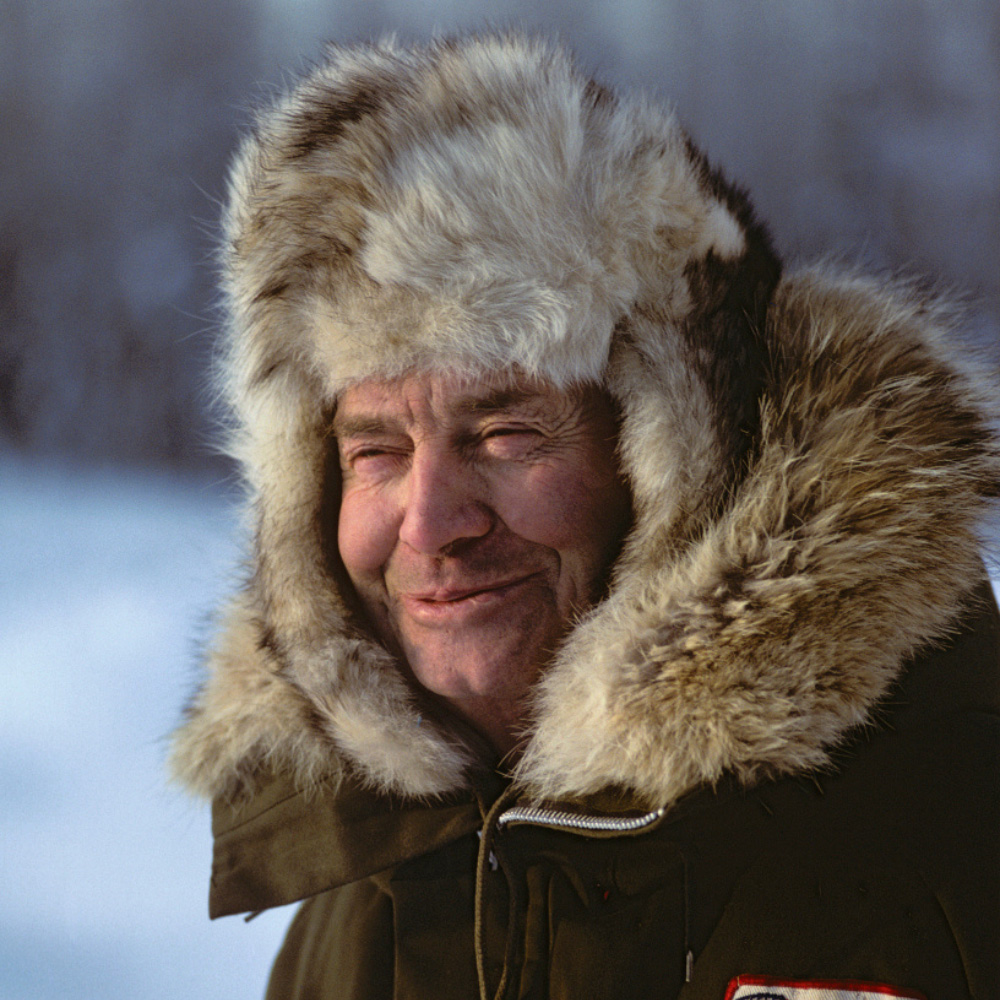
Iditarod Founder - Joe Redington

Around 30 to 40 mushers currently take part in the Iditarod Trail Sled Dog Race. In recent years, the start field has been noticeably smaller, reflecting a broader trend of declining participation compared to earlier decades. Only 33 mushers started in 2025, tying the record low, and 37 teams started in 2026 (34 competing for the title plus three in the new non-competitive Expedition Class). The dip in numbers usually comes down to the sheer cost and commitment required. Running a competitive kennel means spending tens of thousands of dollars on high-quality food, veterinary care, and gear, which is tough to sustain without major corporate sponsorships. Climate change has also made training more difficult, with unpredictable ice conditions and shorter winter windows. Because the race is so grueling, many younger mushers are sticking to shorter regional circuits rather than the full thousand-mile trek to Nome.

Historically, the race was much larger. The largest field ever was 96 mushers in 2008.


Who is allowed to compete in the Iditarod?

Entering the Iditarod requires more than just a dog team; you have to prove you can handle the Arctic. Any musher at least 18 years old can apply, but rookies must first qualify by completing a series of mid-distance races that demonstrate their survival and dog-care skills. Finishing the Yukon Quest also satisfies the qualifying requirements. All entries are reviewed by the race’s Qualifying Review Board.

Since 2026 there has also been a separate, non-competitive Expedition Class. In its first year, three participants travelled the official trail under this category. They are not part of the official standings, are not eligible for prize money, and can receive outside support that is not allowed for competitive mushers.


Do women compete in the race?
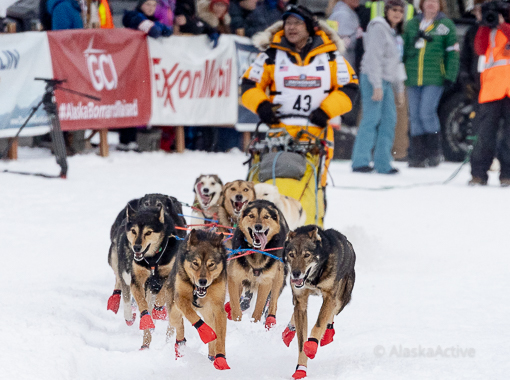
Musher at the Willow Restart

Yes, women have long been part of the Iditarod Trail Sled Dog Race - and they’ve won it, too. Women have competed in every race since 1974, and today around a dozen typically take part each year.

Libby Riddles made history in 1985 as the first woman to win, pushing through severe storm conditions. Susan Butcher followed with four victories in 1986, 1987, 1988, and 1990, becoming one of the race’s most legendary champions.

Their dominance in the mid-1980s even inspired the popular saying:
“Alaska: Where men are men and women win the Iditarod.” The line became especially well known as a T-shirt slogan that sold very well at the time.

In 2026, 12 women were in the starting field of 37, including veterans like Jessie Royer and Michelle Phillips, as well as Jody Potts-Joseph, who became the first Gwich'in woman to compete.
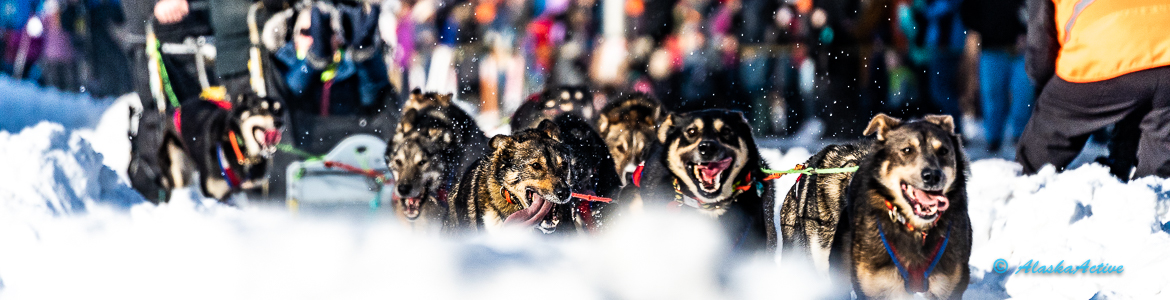

Line of huskies at the Iditarod start

Does the Iditarod Trail Sled Dog Race have checkpoints along the route?

The race route includes a network of about 26 checkpoints between the official restart in Willow and the finish in Nome. The race begins with a ceremonial start in Anchorage, followed by the restart in Willow the next day. In years with too little snow, the starting line has been moved to Fairbanks. Checkpoints vary widely - from private homes along rivers and remote cabins to small villages and historic ghost towns. Some are simply basic landing areas where planes bring in officials, supplies, and set up temporary facilities. Checkpoints act as the main hubs of activity during the Iditarod Trail Sled Dog Race. Veterinarians, race officials, and food supplies for both mushers and dogs are all stationed there. When a team arrives, it is checked in and the arrival time, date, and number of dogs are recorded. Mushers are then directed to camping areas, food drop bags (where applicable), and water sources if available. Teams don’t have to stop at every checkpoint - some pass straight through, while others pause to rest depending on their race strategy.

A few checkpoints, such as Rainy Pass and Nikolai, are relatively accessible by small aircraft, making them popular viewing spots for visitors. You can also experience parts of the race up close on a dedicated Iditarod Checkpoint Tour.


Is the route clearly marked, or do mushers have to navigate it on their own?
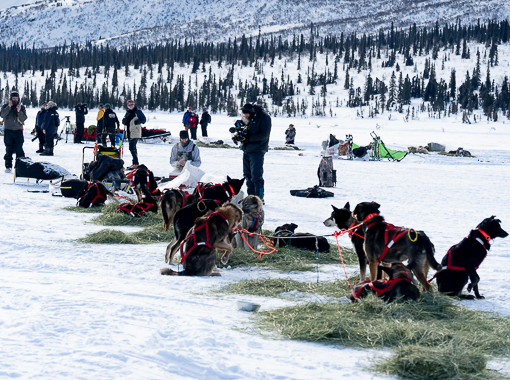
Iditarod musher arriving in Rainy Pass

The trail is carefully marked, but navigation skills are still essential. Each year, dedicated trail breakers create by snowmobile a roughly 1,000-mile winter route across Alaska, placing around 10,000 wooden stakes topped with bright orange markers and reflective tape. In more exposed areas - such as the Alaska Range and along the Bering Sea coast - additional markers like ribbons and tripod structures help guide the way.

Rules require mushers to stay on the official trail of the Iditarod Trail Sled Dog Race. However, conditions can change quickly. Strong winds, drifting snow, wildlife, and passing teams can knock markers down or bury them. At times, storms can be so intense that visibility drops to near zero - mushers may not even be able to see their lead dogs.
Because of this, mushers still need strong navigation skills and must be able to read the terrain and spot subtle signs left by other teams to stay on course.


What prize does the winner receive?

Winning the Iditarod Trail Sled Dog Race is as much about prestige as it is about prize money, but the payout has grown. In 2026 the total purse was $650,000, shared among the 29 finishers, and champion Jessie Holmes received $80,700 for first place. The larger purse was helped by additional sponsor funding, so amounts can vary from year to year. In earlier years, a new pickup truck was also part of the winner’s reward.

Every musher who completes the race receives a finisher payment. Additional prizes are awarded along the trail to the first musher into checkpoints such as McGrath and White Mountain, as well as to the first musher to reach the halfway point and the Yukon River. Expedition Class participants are not eligible for prize money or awards.
Other awards recognize performance and spirit, including:
🔹 Sportsmanship Award
🔹 Humanitarian Award (for excellent dog care)
🔹 Rookie of the Year
🔹 Most Inspirational Musher
🔹 Red Lantern (for the final finisher)


Which dog breeds are used for the Iditarod Race?
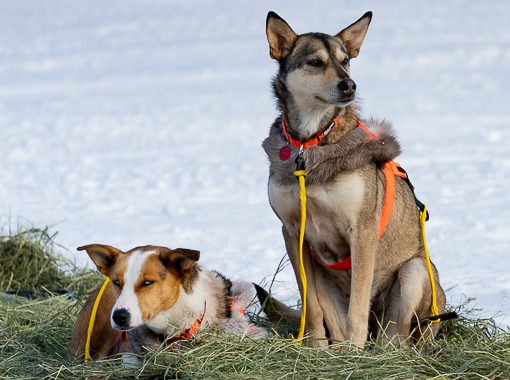
Sled dog resting at Rainy PassMost sled dog teams are made up of Alaskan Huskies. Unlike the purebred Siberian Husky or Alaskan Malamute you see in movies, the Alaskan Husky is a "purpose-bred" mix. They are essentially the ultimate canine athletes, bred specifically for performance rather than a specific look.

Their lineage is a fascinating blend. They descended from the native village dogs used by indigenous people for thousands of years, but over the last century, mushers have mixed in other breeds to fine-tune their abilities. You might find traces of Greyhound or Saluki for speed, Pointers for endurance, and even some German Shepherd for a strong work ethic. This "mutt" heritage gives them "hybrid vigor"—a level of stamina and cold-hardiness that purebreds often struggle to match over a thousand-mile race.


How can I personally participate ?

You can participate as an Idita-Rider. Many people enjoy the chance to ride along with a musher at the ceremonial start in Anchorage of the Iditarod Trail Sled Dog Race. Spots in the Idita-Rider program are auctioned from around December to mid-January, and the highest bidders earn a seat in the sled. The ride covers roughly eleven miles through Anchorage and serves as a fundraiser to support the race.

Another way to get involved is by becoming a volunteer. Hundreds of volunteers help make the race possible each year, both in Anchorage and along the remote trail. Tasks vary widely - from assisting at checkpoints and helping veterinarians, to handling logistics, communications, and crowd coordination at the start and finish. Some volunteers travel to isolated villages or fly-in checkpoints, where they help prepare food drops, check in teams, and support race officials. Others stay in town and assist with events, registration, or media coordination. It’s a unique way to experience the race from behind the scenes and be part of a long-standing Alaskan tradition.


What is the weather like during the race?
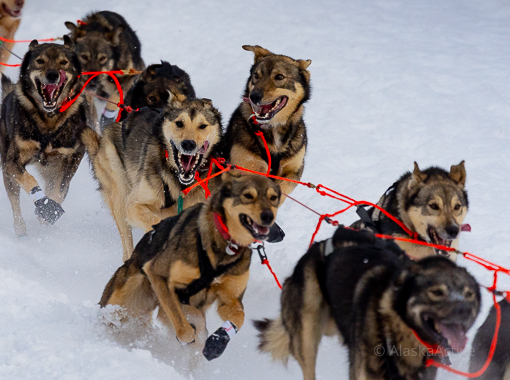
Team of huskies running fast at the IditarodWeather is one of the biggest unknowns during the Iditarod Trail Sled Dog Race. From November through early March, daylight is limited - ranging from about 10 hours to less than 4 hours per day. During this time, temperatures regularly drop well below zero, with winter lows often reaching -40°F to -50°F or colder. It’s not unusual for these extreme conditions to last for several days in a row. The coastal town of Nome is an exception, as the nearby Norton Sound helps moderate temperatures. While winter nights there still fall to around zero, temperatures below -20°F are relatively rare.
Snow typically covers the ground continuously from October through April across most of the route. Interestingly, colder conditions are often better for the dogs, which tend to perform best in temperatures between about -20°F and +20°F.


What kind of clothing is recommended?

Dressing properly for the Iditarod Trail Sled Dog Race is essential, as conditions can be extremely cold and unpredictable. Layering is key. Start with a moisture-wicking base layer, add insulating layers like fleece or wool, and finish with a windproof and waterproof outer shell. Insulated parkas and snow pants are highly recommended. Footwear should be warm and rated for very low temperatures, ideally with thick socks and enough room for insulation. Mittens are better than gloves for keeping hands warm, and hand warmers can be helpful during long periods outdoors. A warm hat that covers your ears, along with a face mask or balaclava, is important to protect against wind and frostbite. Sunglasses or goggles can also help in bright snow and windy conditions. In short, plan for extreme cold and dress in layers that you can adjust as conditions change. Here is a complete packing list for your winter adventure.

Camila, Australia: Hello! The tour was wonderful and we had an amazing time. Nearly every detail was perfect. It was our first time in Anchorage in the winter time to see the Iditarod, Sled Dog Race. We had the great time to watch the ceremonial start of the race on Saturday in Anchorage and on Sunday, going to Willow to see the re-start. Before the start we went to side streets to see the preparation for musher and dogs. All the dogs were so excited to go. Then the start itself. Very interesting is when you know a few mushers. We caught the Winter Aurora Train from Anchorage to Talkeetna and I have to say, it is an enjoyable ride. We were extremely lucky with the weather and had a clear sunny day for the trip. The scenery was absolutely spectacular, and we were able to get some amazing photos of Mt. McKinley and other fabulous scenes along the way. Talkeetna is a gorgeous little place. This Chena aurora tour was another highlight of our vacation! Our guide was wonderful and very passionate about Fairbanks, Alaska, about the Alaskan culture and loves the Aurora as much as we do! We enjoyed the Ice Museum and the hot springs, but seeing the Aurora was a bucket list moment!! Highly recommend this tour.